
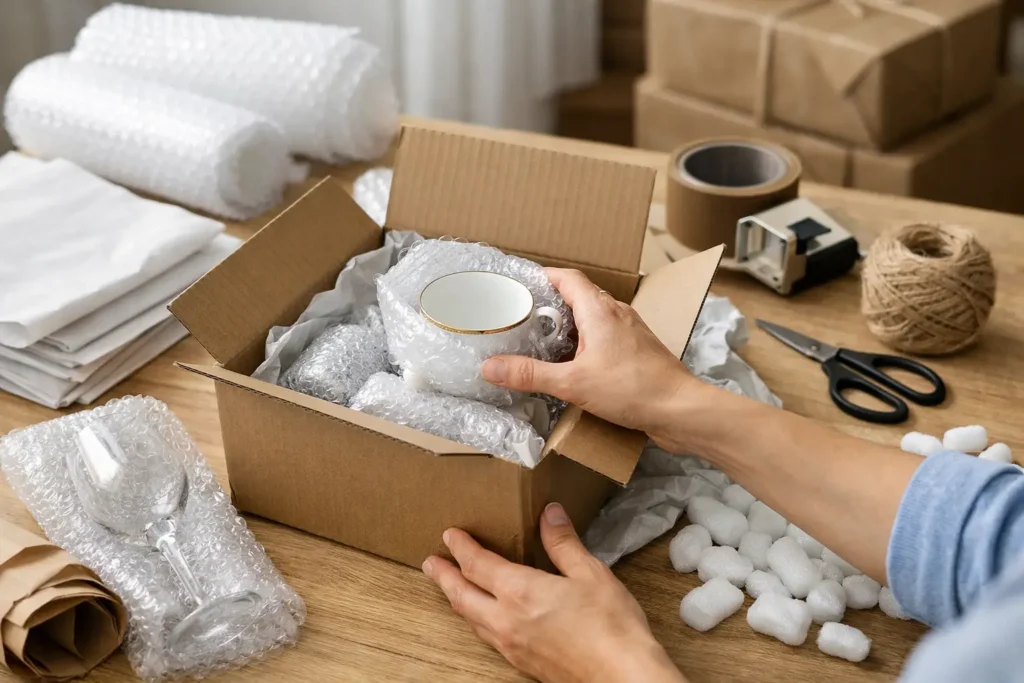
A single loose wine glass can turn an otherwise well-planned move into a box of sharp surprises. Learning how to pack fragile items is less about using huge amounts of bubble wrap and more about preventing movement at every stage: inside the item, inside the box, and inside the moving vehicle.
The goal is simple. Each delicate item should have a protective layer, a snug place in the box, and clear handling instructions. With the right materials and a little patience, most household breakables can arrive safely, whether you are moving from an apartment, a family home, or a small office.
Start with the right packing materials
Packing fragile belongings with grocery bags, worn towels, or weak reused boxes may seem cost-effective, but it can create avoidable risk. Towels and linens are useful as an extra cushion for sturdy items, yet they should not be the only protection for glass, ceramics, or electronics.
Use clean, sturdy moving boxes in several sizes. Small boxes are best for heavy fragile belongings such as books, dishes, and glassware because they are easier to lift safely. Medium boxes work well for lamps, framed pictures, and lightweight decorative pieces. Avoid overfilling large boxes with heavy items, even when they fit.
Keep packing paper, bubble wrap, strong packing tape, scissors, and a marker within reach. Foam sheets or cardboard dividers can be particularly helpful for stemware and plates. You do not need to wrap every item in the same way. A coffee mug, a flat-screen monitor, and a framed mirror each need a different level of support.
How to pack fragile items step by step
Before wrapping anything, sort items by material, shape, and weight. Pack similar items together where possible, but never place a heavy object on top of a lighter or more delicate one. Set aside anything cracked, damaged, or no longer wanted. Moving is a practical time to decide what is worth protecting and what is ready to be replaced.
First, reinforce the bottom of every box with several strips of tape. Then add a two-inch cushion of crumpled packing paper or bubble wrap. This base layer absorbs minor shocks when a box is set down.
Wrap each fragile item individually. Place the item diagonally on packing paper, fold one corner over it, and roll it forward while tucking in the sides. Add a second sheet for thin glass, porcelain, or items with handles. Bubble wrap is useful around unusually shaped pieces, but paper is often better for filling small gaps because it stays in place.
Place heavier wrapped items at the bottom of the box. Arrange lighter pieces above them, keeping each item close enough that it cannot shift but not so tight that the pieces press against one another. Fill every empty space with crumpled paper, foam, or soft packing material. When you gently shake the closed box, you should not hear or feel anything move.
Finish with a protective layer on top before sealing the box. Label more than one side with “Fragile” and identify the contents, such as “Kitchen – Glassware” or “Office – Monitor.” A clear label helps movers place the box correctly and helps you unpack essential items carefully.
Pack dishes, glassware, and stemware upright
Plates often break because they are stacked flat, which puts pressure across their broadest surface. Wrap each plate separately, then stand plates vertically in a small, sturdy box, much like records in a crate. Add cardboard between stacks of plates for more protection.
Bowls can be nested if each one is wrapped and there is a layer of paper between them. Start with the largest bowl, place a wrapped smaller bowl inside, and continue only if the bowls fit without force. Fill the inside of the smallest bowl with paper so the nested set stays supported.
For drinking glasses, wrap the body and pay extra attention to the rim. Stuff the interior lightly with paper before wrapping the outside. Stemware needs more care: wrap the stem first, then the bowl, and place each glass upright in a divided box if possible. If no divider is available, build paper cushions between each glass and do not stack heavy items above them.
Protect artwork, mirrors, lamps, and other awkward pieces
Flat items need edge protection because corners are usually the first point of impact. Cover framed artwork or mirrors with packing paper, then add bubble wrap or a moving blanket. Cardboard corner protectors are ideal, but folded cardboard taped around each corner also works well. Never place tape directly on a finished frame, glass surface, or painted canvas.
Pack framed pieces vertically in a purpose-made picture box or between layers of sturdy cardboard. Keep them upright during transport rather than laying them flat beneath other boxes. For large mirrors or glass tabletops, professional handling is often the safer choice, especially if the item is expensive, oversized, or difficult to carry through tight stairways.
Remove lampshades from lamps and pack them separately. A lampshade can be lightly filled with clean paper and placed in a box by itself or with other lightweight shades. Wrap the lamp base, secure the cord, and use a box that leaves room for cushioning on all sides. Do not use a lampshade as a container for heavy objects.
Give electronics extra protection
Original manufacturer boxes are the best option for televisions, monitors, computers, and printers because they are designed to support the item’s shape. If those boxes are gone, use a snug double-walled box with generous padding around every side.
Take photos of cable connections before unplugging your equipment. Remove removable batteries, ink cartridges, and loose accessories where appropriate, then pack cables in labeled bags. Wrap screens with a soft microfiber cloth or foam sheet before adding bubble wrap. Avoid placing bubble wrap directly against a screen for a long period if heat or moisture is a concern.
Hard drives, gaming consoles, and printers should travel upright where possible. Keep electronics out of extremely hot, cold, or damp conditions, and avoid loading them beneath furniture. If a device contains sensitive business files, back up the data before moving. Physical protection matters, but so does protecting the information stored on the device.
Do not overload or rely on “fragile” labels alone
A fragile label is a useful warning, not a substitute for good packing. Boxes still need to withstand lifting, stacking, and the normal motion of a moving truck. If a box feels too heavy for one person to lift comfortably, repack it into two smaller boxes.
Weight distribution matters in the truck as well. Fragile boxes should be loaded on top of heavier, stable boxes and secured so they cannot slide. They should never sit under furniture, appliances, or loose tools. This is one reason a trained moving team can make a meaningful difference: careful loading is as important as careful wrapping.
For valuable antiques, large glass pieces, heirlooms, or delicate office equipment, consider professional packing rather than taking chances. Dencomovers can provide tailored packing and moving support when you need extra reassurance that high-risk items will be handled with care.
Keep a small fragile-items essentials box
Some breakables are better kept with you rather than loaded into the truck. Pack a clearly marked essentials box for prescription glasses, jewelry, important documents, small electronics, favorite mugs, and any sentimental items you would not want out of sight.
Use a hard-sided container if possible, and do not leave it unattended during the move. This approach also makes the first night in your new place easier. You will have the items you need without opening every box labeled “fragile” while tired and surrounded by unpacked belongings.
A careful move does not require perfection or endless supplies. It requires steady packing, sensible box weights, and no empty spaces around anything that can crack. Give delicate belongings the time they deserve now, and opening boxes at your new address can feel like a fresh start rather than a damage report.