
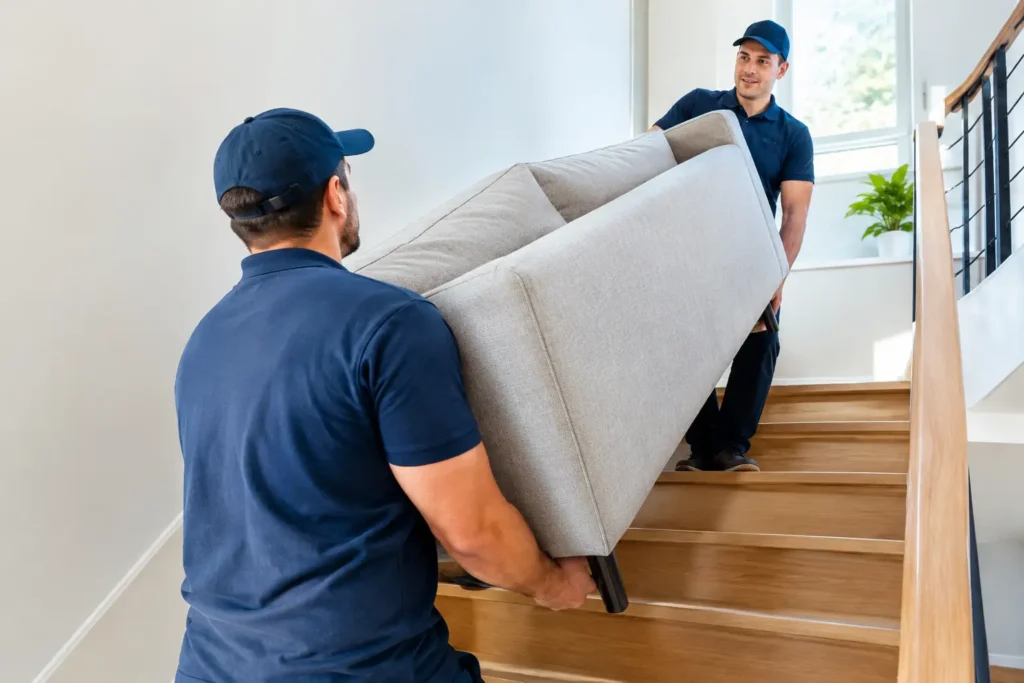
A sofa can look perfectly manageable until it reaches the first turn in a narrow staircase. Then there is a banister to protect, a wall that scuffs easily, limited room to turn, and a heavy item that nobody should be trying to control alone. Staircase furniture removal is one of the most demanding parts of a move because it relies on planning and careful handling, not just strength.
Whether you are moving out of a walk-up apartment, relocating from a townhouse, or collecting a large piece of furniture from another floor, the right approach protects your home, your belongings, and the people doing the lifting.
Why Staircase Furniture Removal Needs a Plan
Stairs create challenges that do not exist on a level hallway. Every step changes the angle, height, and weight distribution of an item. A dresser may fit through a doorway but catch on a ceiling at the stair turn. A sectional may clear the first flight yet be too wide for the landing. Even a mattress can become difficult when the staircase is steep or enclosed.
Trying to force furniture through a tight space can damage more than the item itself. Common problems include scratched walls, chipped paint, loose stair rails, dented flooring, and strained backs or shoulders. The risk increases when people rush because moving day is running late or because the furniture was not measured beforehand.
A trained moving team treats the staircase as part of the job, not an obstacle to solve at the last minute. They assess access, decide the safest carrying position, protect vulnerable surfaces, and communicate throughout the lift. This makes a noticeable difference when moving bulky, fragile, or awkwardly shaped pieces.
Measure First, Then Make a Moving Plan
The most useful step happens before anyone picks up a sofa. Measure the furniture and the route it needs to travel. That includes the item’s height, width, depth, and diagonal measurement, along with door openings, stair width, ceiling height, landings, and turns.
Measurements do not always give a simple yes-or-no answer. A piece that is wider than the staircase may still fit if it can be turned vertically or carried on an angle. On the other hand, an item that appears to fit on paper may be impossible to maneuver around a low ceiling or a sharp corner. This is why experienced movers look at the entire route rather than focusing on one doorway.
It also helps to identify obstacles before moving day. Shoes, picture frames, plant stands, loose rugs, and boxes on the landing all reduce safe working space. If a building has shared stairwells, confirm any access rules or quiet-hour restrictions in advance. Apartment buildings may require elevator reservations, loading-zone approval, or proof of insurance from a moving company.
How to Prepare Furniture and the Stairway
Preparation reduces the chance of damage and gives movers room to work safely. Clear the staircase fully, including the bottom and top landing. If possible, remove small decorative items, detachable railings, or light fixtures that narrow the route. Do not remove a fixed handrail unless you are certain it can be safely reinstalled and building rules allow it.
Furniture should be emptied before it is moved. Drawers, shelves, and cabinets add weight and can shift unexpectedly. Remove detachable legs, cushions, shelves, mirrors, and glass panels when practical. Keep screws and fittings in labeled bags, taped securely to the furniture or packed in a clearly marked box.
For most staircase moves, these steps make the biggest difference:
- Empty drawers and cabinets to reduce weight and prevent shifting.
- Disassemble removable parts such as legs, shelves, and headboards.
- Wrap wood, glass, and upholstered pieces with suitable protective materials.
- Clear rugs, clutter, and trip hazards from every step and landing.
- Reserve parking close to the property so the carrying distance stays manageable.
Protecting the route matters as much as wrapping the furniture. Floor covers, moving blankets, and corner protection can help prevent marks on stairs, walls, and door frames. The exact protection needed depends on the property, the item, and the weather. For example, a rainy-day move may require extra care to keep wet coverings from making hardwood stairs slippery.
How Professional Movers Handle Tight Stairs
Professional staircase furniture removal begins with an access check. Movers consider the weight and shape of each item, the condition of the stairs, available turning space, and the number of people needed for a controlled lift. They also decide whether disassembly, a different exit route, or specialized equipment is the safer choice.
During the move, each person has a defined role. One mover may guide the upper end while another controls the lower end and watches the steps. They communicate before lifting, stopping, turning, and setting an item down. That coordination is essential because an awkward item can shift quickly if one person changes direction unexpectedly.
The safest angle depends on the piece. Sofas are often moved upright or on end to reduce their width. Mattresses may be bent slightly around a turn, provided their construction allows it. Solid wood furniture can require a slower, more level carry to avoid stress on joints. Fragile pieces such as mirrors, glass tables, and antiques need additional wrapping and careful handling rather than speed.
Professional movers also know when to stop. If the item is catching, scraping, or forcing an unsafe body position, continuing is not a solution. They may remove additional components, try a different angle, or reassess the route. Dencomovers plans each move around the property and the furniture involved, rather than relying on a one-size-fits-all method.
When Stairs Are Not the Best Route
Sometimes the staircase is simply not the right route. This can happen with oversized furniture, narrow spiral stairs, very low ceilings, or heavy items that would put people or property at unnecessary risk. In these situations, an external route may be considered, such as a ground-floor window, balcony access, or a furniture hoist arranged by qualified professionals.
Disassembly is often the simpler answer. Bed frames, dining tables, modular sofas, wardrobes, and some desks are designed to come apart. However, avoid taking apart furniture that is glued, structurally delicate, or difficult to rebuild without instructions. Saving a few minutes during removal is not worthwhile if the piece is damaged during reassembly.
There is also a practical financial decision. A low-cost do-it-yourself move can become expensive after a damaged wall, broken item, injury, or last-minute vehicle rental. For a small, light item in a wide stairwell, help from friends may be enough. For large furniture, multiple flights, or a time-sensitive move, professional assistance is usually the more predictable option.
What Affects the Cost of Furniture Removal on Stairs?
Stair access is one factor in a moving quote, but it is not the only one. The size and number of items, distance between properties, packing needs, parking availability, disassembly requirements, and the number of movers required all affect the final price. A single armchair carried down one flight is very different from moving a full apartment from a fourth-floor walk-up.
Clear information helps a moving company provide a more accurate estimate. Share photos of tight turns or unusual staircases, list any especially heavy pieces, and mention if there is no elevator. It is better to flag a potential access issue early than to discover it after the truck arrives.
Make Moving Day Easier on Everyone
On moving day, keep children and pets away from the stair route, wear closed-toe shoes, and leave enough room for movers to place furniture safely between lifts. Avoid standing directly below an item on the stairs or trying to assist unless the crew asks you to. Too many people in a tight stairwell can make a controlled move harder, not easier.
If you are arranging a full move, pack a small essentials bag separately so nobody has to search through boxes while furniture is being carried. Keep keys, building access codes, parking permits, and contact numbers easy to reach. A calm, prepared start gives the moving team the best chance to work efficiently.
The right help turns a difficult staircase from a moving-day worry into a manageable part of the plan. With accurate access details, proper protection, and trained hands, even the heaviest pieces can be moved with the care your home and furniture deserve.