
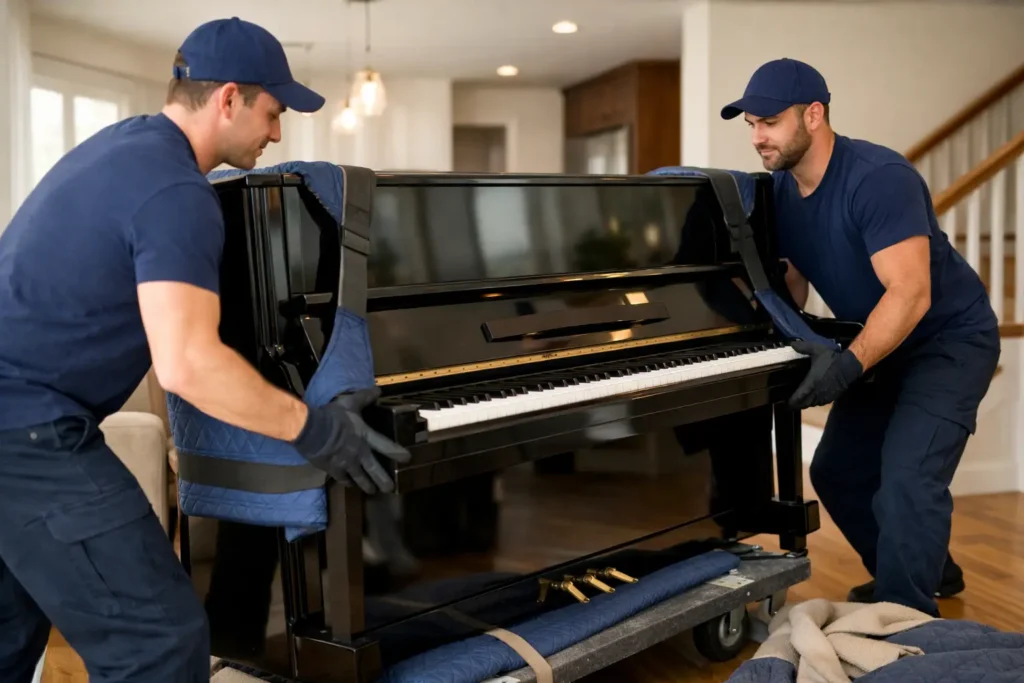
A piano is one of the few household items that can turn a straightforward move into a serious safety risk. If you are researching how to move a piano, the first decision is not which end to lift. It is whether the instrument, route, equipment, and number of helpers make a DIY move realistic at all.
Pianos are heavy, awkwardly balanced, and easily damaged by pressure in the wrong place. A small upright can weigh 300 to 500 pounds, while a baby grand or grand piano may weigh 500 to well over 1,000 pounds. The weight is only part of the challenge. Its cast-iron frame, delicate action, pedals, legs, finish, and internal strings all require careful handling.
For most moves involving stairs, tight turns, long carrying distances, or a grand piano, professional piano movers are the safer option. The cost of specialist help is often far less than the cost of repairing a damaged instrument, wall, floor, or injury. Still, careful planning can make any piano move safer and less stressful.
Start With the Piano and the Route
Before arranging equipment or asking friends to help, identify the type of piano you are moving. An upright piano has a compact shape, but its center of gravity is high and it is much heavier than it looks. A spinet or console piano may be lighter, but it still needs the same controlled handling. Grand and baby grand pianos require a different process because the legs, lid, and pedals must be protected or removed before transport.
Next, measure the piano and the path it will take. Check doorways, hallways, elevators, landings, gates, and the clearance inside the moving vehicle. Measure the narrowest point, not just the front door. Account for door handles, handrails, low ceilings, and tight corners where the piano may need to pivot.
Do not assume a piano will fit because it entered the home years ago. Flooring, furniture, renovations, and even a different doorway can change the route. If there are stairs, consider the angle, width, number of steps, and whether there is a safe place to pause. A narrow staircase or sharp turn is often the point where a professional assessment becomes essential.
Equipment You Need to Move a Piano Safely
A piano should never be moved with bare hands and good intentions alone. It needs the right protective materials and equipment designed for heavy, controlled lifting. At a minimum, prepare the following:
- Heavy-duty moving blankets or padded piano covers
- Strong packing tape or stretch wrap to secure blankets
- A heavy-duty furniture dolly or piano skid board
- Lifting straps rated for heavy furniture
- Non-slip work gloves and closed-toe shoes
- Floor protection such as cardboard, Masonite, or moving runners
Moving blankets protect the finish from scratches and absorb minor knocks. They should cover all exposed surfaces, including corners and pedals, then be secured firmly without placing tape directly on the piano’s finish.
A standard lightweight hand truck is not a safe substitute for a piano dolly. It can tip, shift, or place damaging pressure on the piano’s lower structure. For grand pianos, movers commonly use a piano board, also called a skid board, which supports the instrument after it has been carefully placed on its side and secured.
How to Move an Upright Piano
An upright piano must remain upright whenever possible. Tipping it onto its side can put stress on internal components and makes it harder to control. The strongest part of an upright is the main body, not the legs, keyboard cover, music stand, or pedals.
First, remove loose items from the piano, such as sheet music, decorations, and the bench. Lock the keyboard lid if it has a lock. If not, gently secure it closed with stretch wrap over the protective blankets. Never tape the lid directly to the finish.
Wrap the piano fully with padded moving blankets, paying close attention to the front corners, lower panel, and top. Secure the padding tightly enough that it cannot slip during the move, but avoid compressing the pedals or applying pressure to fragile trim.
Position the dolly alongside the piano, then have trained, capable helpers lift from the lower body while one person stabilizes the top. The piano should be lifted only enough to slide it onto the dolly. Do not try to carry it across the room. Once it is centered and stable, secure it to the dolly with moving straps and move slowly, with one person directing the route.
Keep hands away from pinch points between the piano, walls, door frames, and dolly. Take turns slowly. If the piano begins to tilt, stop immediately and reset rather than trying to catch its full weight.
Moving a Grand or Baby Grand Piano
Grand pianos require more preparation and are rarely suitable for an untrained DIY team. Their legs are not designed to carry the instrument while it is being maneuvered through a home. A leg can fail suddenly, causing extensive damage and a real risk of injury.
The usual professional process starts by securing the lid and protecting the keyboard. The piano is then carefully placed on its long side onto a padded piano board. The legs and pedal lyre are removed according to the manufacturer’s design, wrapped separately, and clearly labeled. The body is padded, secured to the board, and moved with specialized dollies and straps.
Because this process varies by model, it is not wise to follow a generic video tutorial for a valuable grand piano. The wrong screw, angle, or lifting point can cause damage that is difficult to repair. If your piano is an antique, a family heirloom, or a high-value instrument, arrange specialist moving support and consider checking its insurance coverage before moving day.
Protect Your Home as Well as the Instrument
Pianos can damage more than themselves. Their concentrated weight can dent hardwood, crack tile, tear carpet edges, or mark stairs. Cover floors from the piano’s current position to the truck, including hallways and entranceways. If you are crossing wood, stone, or tile, use rigid floor protection under the route rather than relying on blankets alone.
Clear the path completely before anyone starts lifting. Remove rugs that could slide, move furniture, secure pets in another room, and keep children away from the carrying route. Open doors fully or remove them temporarily if a few extra inches will make the turn safer.
Weather also matters. Rain can make steps, ramps, and walkways slippery, while extreme heat can make lifting more physically demanding. If conditions are unsafe, rescheduling is the sensible choice. No moving deadline is worth a preventable accident.
Loading and Transporting the Piano
Once outside, the piano needs a stable, level route to the vehicle. Use a proper loading ramp with adequate weight capacity, and never attempt to push a piano up a narrow, unsecured ramp. The moving vehicle should have anchor points so the piano can be strapped upright against a solid wall, away from loose furniture and boxes.
Do not place heavy items on top of a piano or stack belongings against its pedals, keys, or lid. Avoid transporting it in a vehicle where it can slide during turns or braking. A short journey can still cause major damage if the instrument is not secured correctly.
Temperature and humidity changes may affect tuning, particularly during a long move or storage period. That is normal. Wait until the piano has been in its new location for at least a few weeks before scheduling a tuning, giving the wood and strings time to adjust to the new environment.
When Hiring Piano Movers Is the Better Choice
A professional service is strongly recommended when there are stairs, elevators, restricted access, oversized pianos, or long-distance transportation involved. It is also the right choice when you do not have enough physically capable helpers or the correct equipment.
Ask a moving company whether its team has specific piano-moving experience, what equipment it uses, and what insurance protection applies during transport. Share accurate photos, measurements, access details, and the piano type when requesting a quote. This helps the movers bring the right crew and avoid surprises on moving day.
Dencomovers can help plan household moves where a piano is part of the load, with a tailored approach that considers access, protection, and the practical demands of the job. Clear information from the start makes pricing and scheduling more accurate.
A piano can outlast generations when it is treated with care. Give the move the same attention you would give the music it holds, and choose experienced hands whenever the route or weight leaves room for doubt.