
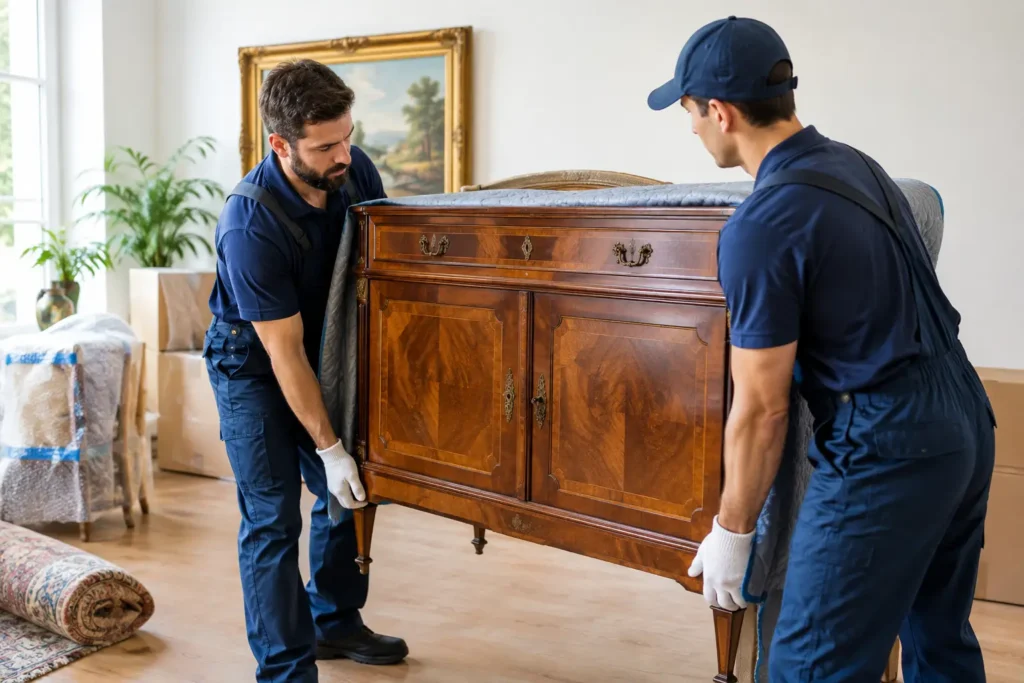
A Georgian chest with loose veneer, a glass-fronted display cabinet, or a family mirror that has hung in the same hallway for decades cannot be treated like ordinary furniture. This guide to moving antiques is designed to help you protect pieces that may be valuable financially, sentimentally, or both – before a single box is packed.
The safest move begins well before moving day. Antiques often have hidden weaknesses: old glue joints, fragile handles, hairline cracks, brittle finishes, and original glass that can shift under pressure. A careful plan reduces the chance of damage and gives everyone involved clear instructions for handling each item.
Start With an Honest Assessment
Look at every antique closely before deciding how it will travel. Check for existing scratches, chips, loose legs, sticking drawers, cracked glass, and signs of woodworm or weakened joints. Take clear, well-lit photos from several angles, including close-ups of any existing damage. These photos create a useful record of condition and can make a difficult conversation much easier if damage is discovered later.
For high-value items, consider getting a current appraisal before the move. This is especially sensible for fine art, clocks, silver, antiques with provenance, and furniture worth more than standard moving coverage. An appraisal helps with insurance decisions and ensures you understand what is actually at risk.
Not every old piece needs the same level of preparation. A solid oak dining table may be heavy but stable, while an ornate inlaid side table may be light and far more vulnerable to twisting. The right approach depends on the material, age, condition, and value of the item.
Make a Moving Plan for Each Antique
Antiques should not be an afterthought on a general packing list. Create a short inventory that identifies each piece, its room, its condition, and any special handling needs. Note whether it must remain upright, whether drawers should stay in place, and whether a key, shelf, or detached fitting needs to travel separately.
Measure large furniture and the route it must take. Check doorways, staircases, elevators, turns in hallways, and access at both properties. A large antique wardrobe may need partial disassembly, while a delicate cabinet may be safer moved whole if taking it apart could disturb old joints.
This planning stage is also when you should decide whether professional help is needed. Heavy, delicate, awkward, or particularly valuable pieces are rarely good candidates for a rushed DIY move. Trained movers can assess access, bring suitable protection, and use the right lifting techniques rather than forcing an item through a tight space.
Tell Your Movers What They Are Handling
Be specific when requesting a quote. Mention antiques early, rather than on the morning of the move. Include photos and dimensions where possible, and point out any fragile glass, marble tops, detachable parts, or access restrictions.
A reputable moving team can then plan the vehicle space, crew size, protective materials, and equipment required. This is particularly helpful for house moves where antiques are mixed with everyday furniture and boxes. Clear information helps prevent a valuable item from being packed too tightly or loaded in the wrong order.
Packing Antiques for Safe Transport
The aim is to protect the surface, stabilize moving parts, and prevent movement inside the vehicle. Start by removing anything that can come loose, such as shelves, keys, finials, lampshades, glass panels, and marble tops. Wrap and label these parts separately, keeping them with the item where practical.
Use clean, soft packing materials directly against finished surfaces. Acid-free tissue paper is a sensible choice for delicate finishes, while moving blankets, padded furniture covers, and bubble wrap provide additional cushioning. Do not place adhesive tape directly on antique wood, veneer, lacquer, gilding, or painted surfaces. Tape can lift finish or leave residue that is difficult to remove safely.
Drawers should usually be emptied to reduce strain on the frame. If drawers are loose, secure them with padded wrap around the whole piece rather than tape across the furniture itself. Doors and lids should be gently secured so they cannot swing open during lifting or transport.
For paintings, mirrors, and framed artwork, use corner protectors and a rigid outer layer. Mark glass items clearly, but do not rely on a label alone. They should be loaded upright, protected from pressure on both sides, and kept away from heavy furniture that could shift.
Avoid Common Packing Shortcuts
Plastic stretch wrap can be useful as an outer layer over blankets, but it should not sit directly against a delicate finish for long periods, especially in warm conditions. Moisture and heat can affect older varnishes, fabrics, and wood surfaces.
Newspaper is another poor choice for valuable antiques. Ink may transfer to fabric, paper, or unfinished surfaces. Likewise, loose blankets without proper securing can slide during transit and expose corners at exactly the wrong moment.
Lifting and Loading Without Stressing the Piece
A piece of antique furniture should be lifted from its strongest structural points, not by handles, decorative rails, chair arms, or drawer fronts. These features may look sturdy but are often the first parts to fail under weight.
Keep antique furniture as level as possible. Tilting a tall cabinet too far can strain its frame, shift shelves, or put pressure on old joints. Use furniture dollies, lifting straps, and enough people for the weight involved. Saving a few minutes with an understaffed lift is not worth risking a broken leg, damaged floor, or injury.
Inside the moving vehicle, antiques should be secured so they cannot slide, tip, or rub against other items. Padded blankets, straps, and careful load order matter. Heavy objects belong low and stable, while fragile pieces need protected space rather than being wedged into a gap.
Climate can also affect the plan. Extreme heat, cold, or damp conditions may cause wood to expand or contract and can be hard on old upholstery, paintings, and instruments. For a long-distance move or a period in storage, ask about climate-appropriate transport and avoid leaving sensitive items in an unventilated vehicle longer than necessary.
Insurance and Documentation Matter
Standard moving coverage may not match the full value of an antique. Before moving day, ask what coverage applies, what evidence may be needed for a claim, and whether you need additional valuation protection for specific items. Keep copies of appraisals, receipts, photographs, and your inventory in a separate place from the items themselves.
Insurance is valuable, but prevention is better. Good documentation supports peace of mind, while careful preparation and professional handling give your antiques the best chance of arriving in the same condition they left.
Unpacking at the New Property
Do not rush to unwrap antiques as soon as they arrive. First, confirm that the room is ready, the floor is clear, and the final location makes sense. Moving a fragile piece twice creates twice the opportunity for damage.
Inspect each item as protective materials come off and compare it with your pre-move photographs. Let wooden furniture acclimate before placing it near radiators, fireplaces, direct sunlight, or damp exterior walls. If a piece has been in a cold vehicle, give it time to adjust gradually rather than exposing it to sudden heat.
For antiques that need specialist care, such as a grandfather clock, piano, or large chandelier, arrange appropriate installation or servicing after the move. A clock may need to be leveled and set up correctly, while a chandelier should be handled by a qualified professional.
Moving antiques is not about being overly cautious. It is about recognizing that irreplaceable pieces deserve a plan equal to their history. With clear preparation, suitable packing, and careful handling, your furniture and heirlooms can begin their next chapter safely in your new home.