
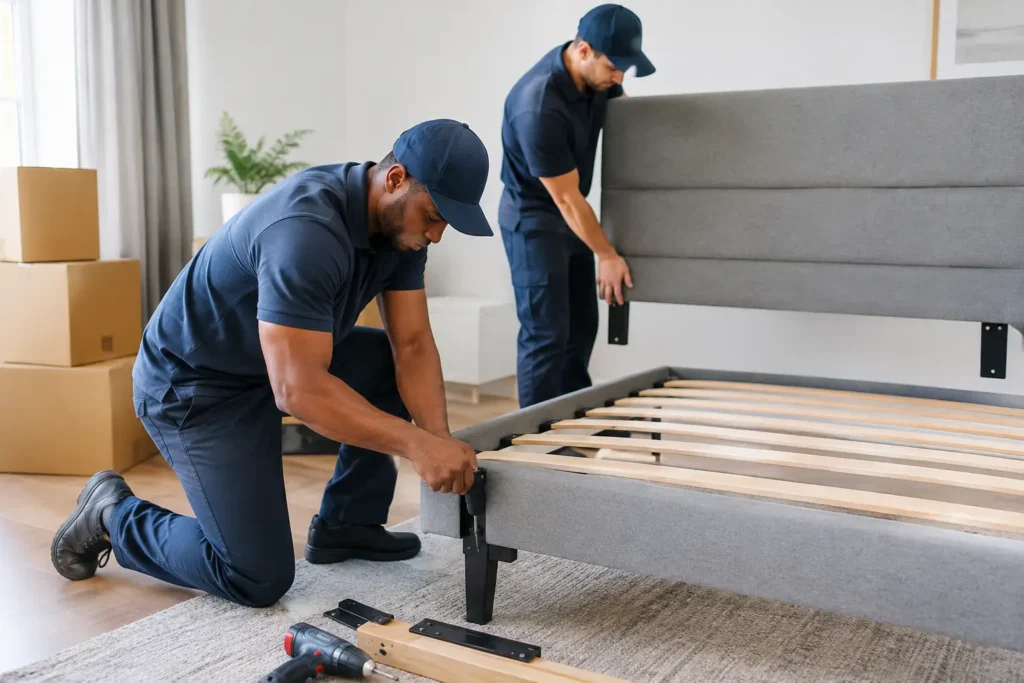
A bed frame that fits comfortably in a bedroom can become the biggest obstacle on moving day. It may not clear a narrow hallway, stairwell, elevator, or van door in one piece. So, can movers dismantle beds? In most cases, yes. Professional movers can take apart standard bed frames and reassemble them at your new home when that service is agreed upon in advance.
The key is communication. Bed disassembly is common, but it is not something to assume every moving team includes automatically. The frame type, available tools, condition of the furniture, and scope of your move all affect what can be done safely.
Can Movers Dismantle Beds Safely?
Trained movers regularly dismantle beds to make loading safer and to protect both the furniture and the property. A typical job may involve removing the mattress and box spring, separating side rails from the headboard and footboard, taking out support slats, and carefully packing loose hardware.
This is particularly helpful for larger items such as king-size beds, heavy wooden frames, storage beds, and bed frames that need to travel through tight spaces. Taking a frame apart reduces the risk of scraped walls, damaged banisters, bent rails, or injuries from trying to maneuver an awkward item as one piece.
However, the answer depends on the bed. Simple metal or wooden frames are usually straightforward. Platform beds, bunk beds, captain’s beds, adjustable bases, and frames with built-in drawers can take longer and may require more careful handling. If your bed has electrical components, hydraulic lifts, or a complex mechanism, tell the moving company before you book.
What Movers Usually Handle
When bed disassembly has been included in your moving plan, movers will generally work through the frame methodically. They will identify the main connection points, remove components in a sensible order, and keep bolts, screws, brackets, and other small pieces together.
Good preparation and labeling matter here. Hardware may be placed in a clearly marked bag and secured to a larger bed component where appropriate, so it is available when the frame is rebuilt. The headboard, rails, and slats can then be wrapped or protected for transport, depending on the level of packing service you have chosen.
At delivery, the process is usually reversed. Movers bring the pieces into the correct room, reassemble the frame, and position it where you want it. They may place the mattress back on the bed as well, provided access is clear and the service has been confirmed.
A full-service move is often the best fit if you want support at both ends of the move. For a smaller move or a man-and-van service, bed disassembly may still be available, but it should be specifically requested when asking for a quote.
When Bed Disassembly May Not Be Included
Moving companies have different service levels, and some basic transportation-only packages cover loading and unloading rather than furniture assembly. A team may be able to move a bed frame that is already dismantled but may not be scheduled or equipped to take it apart during the appointment.
There are also situations where movers may recommend that a specialist handles the item. Antique beds, fragile designer furniture, wall-mounted headboards, custom-built frames, and beds with complicated electrical or mechanical parts can require special care. Disassembling these items without the right knowledge may affect their condition, warranty, or future stability.
Movers may also decline to dismantle a frame if it is already damaged, heavily worn, or unsafe to take apart. For example, stripped screws, cracked wood around bolt holes, rusted fittings, or missing support pieces can turn a routine task into a risk. A reliable moving team should explain the issue clearly rather than forcing a component that could break.
Tell Your Movers About the Bed Before Moving Day
The easiest way to avoid surprises is to mention every bed that needs attention when requesting your quote. Share the bed size, type, and any features that make it unusual. Photos can be useful for a large storage bed, a bunk bed, or a frame with an upholstered headboard and multiple sections.
You should also let the company know about access at both addresses. Narrow staircases, limited parking, upper-floor apartments, small elevators, and long walks from the vehicle can all influence the moving plan. A bed frame may need to be dismantled simply because it cannot safely pass through the route to the van.
If you are moving several bedrooms, specify how many beds need disassembly and reassembly. This allows the movers to allocate enough time, send the right number of trained staff, and account for the work accurately. It is a small detail that can make moving day feel much more organized.
How to Prepare a Bed for Movers
You do not need to start taking apart the frame yourself unless you prefer to. In fact, partially dismantling a bed without keeping the hardware organized can create delays. Instead, prepare the area so the movers can work safely and efficiently.
Remove bedding, pillows, mattress protectors, and personal items stored under or inside the bed. Empty drawers in a storage bed unless the mover has advised otherwise. Clear a path around the frame and through the doorway, especially if the bedroom is compact.
Before the movers arrive, take a few minutes to check the bed for existing marks, loose sections, or missing parts. If there is a particular way you want the bed positioned in the new room, make a note of it or communicate this at delivery. It is much easier to place a large frame correctly while the room is still clear.
Keep any manufacturer instructions you have, especially for adjustable beds or frames with a less familiar design. Movers can often handle standard assembly without them, but instructions can be useful if the bed has a specialized mechanism.
Mattresses Need Their Own Moving Plan
Dismantling the frame is only one part of moving a bed. Mattresses need protection too. A mattress bag or protective cover helps keep fabric clean during loading, transport, and unloading. This is especially worthwhile when moving through shared hallways, rainy weather, or dusty storage areas.
Memory foam and hybrid mattresses are generally flexible enough to move on their side for a short period, but they should not be sharply folded unless the manufacturer explicitly permits it. Adjustable bases should be handled according to their design, and any power cables, remotes, or legs should be kept together and labeled.
If you have a box spring, measure it before moving day. In older homes and apartment buildings, a box spring can be more difficult to navigate than the bed frame itself. Some split box springs are easier to move, while a one-piece unit may need a different route or additional planning.
Questions Worth Asking Before You Book
A clear conversation before moving day protects your time and budget. Ask whether bed dismantling and reassembly are included in the quoted service, whether there is an additional charge for complex frames, and whether the crew will bring the necessary tools.
It is also sensible to ask how hardware will be stored and whether the company can handle beds with drawers, lift-up storage, or electrical features. If your move includes other large furniture such as wardrobes, dining tables, or desks, mention those at the same time. Planning these items together gives you a more accurate quote and avoids last-minute changes.
Dencomovers can tailor moving support around the furniture and access at your property, with trained movers and insurance coverage of up to £5,000 for added peace of mind. Whether you need a full house move or help with a single large item, confirming the details early keeps the day simple.
A bed should be ready to sleep in, not waiting in pieces after a long move. Let your movers know what frame you have, clear the room, and arrange disassembly in advance so your new home can start feeling settled from the first night.