
A sofa stuck halfway through a doorway can turn a simple move into a long, frustrating day. The best way to move furniture is not just about strength. It is about planning the route, protecting the item, using the right equipment, and knowing when a job needs professional help.
Furniture gets damaged in predictable ways. Legs snap when pieces are dragged instead of lifted. Wood gets chipped on tight corners. Upholstery gets torn when it rubs against rough walls or truck edges. Floors and doorframes often take a hit too. A smoother move starts before anything is lifted.
The best way to move furniture starts with preparation
If you want furniture to arrive in good condition, begin by checking exactly what you are moving. Measure large items such as beds, wardrobes, dining tables, desks, couches, and dressers. Then measure doorways, hallways, stairwells, elevators, and the vehicle space. Many moving delays happen because people assume a piece will fit when it actually needs to be turned, disassembled, or carried a different way.
Clear the path next. Remove rugs, cords, shoe racks, small tables, and anything else that creates a tripping hazard. If the weather is wet, think about the path from the front door to the truck or van. Slippery walkways and muddy surfaces make heavy lifting much riskier.
It also helps to decide in advance which items should be taken apart. Beds, table legs, shelving units, and some couches are easier and safer to move in sections. Keep screws, bolts, and brackets in labeled bags and tape those bags to the matching item if possible. That small step saves a lot of time during unloading and reassembly.
Use protection before you use force
One of the biggest moving mistakes is trying to save time by skipping protective materials. That usually leads to scratches, dents, or stained fabric. Wrapping furniture properly is often the difference between a careful move and an expensive repair.
Wood furniture should be protected with moving blankets or padded covers. Upholstered pieces need clean wraps that guard against dirt and snagging. Glass components should be removed, wrapped separately, and placed upright when transported. Drawers should be emptied if the item is heavy, even if they stay in place during the move.
Stretch wrap can help keep doors and drawers closed, but it should not be the only layer of protection for delicate surfaces. If you wrap polished wood too tightly without padding, you can still end up with pressure marks or rubbing damage. The goal is not simply to contain the item. The goal is to cushion it.
The right equipment makes furniture easier to move
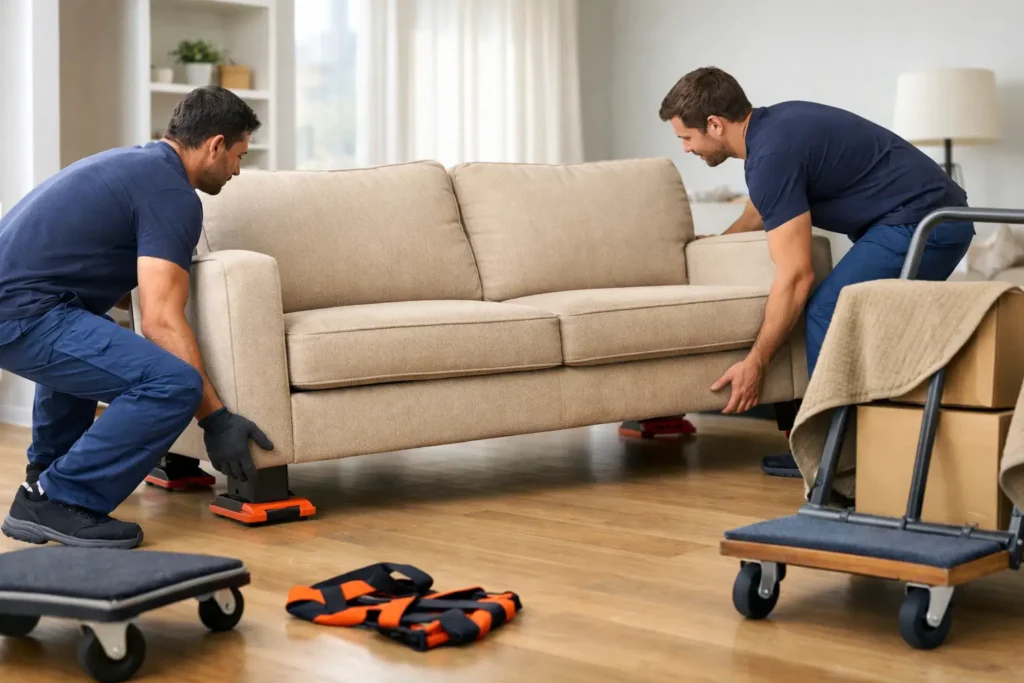
The best way to move furniture safely usually involves more than hands alone. A furniture dolly, hand truck, lifting straps, sliders, and moving blankets reduce strain and improve control. These tools are especially useful for heavier items like washers, filing cabinets, dressers, and sectional pieces.
Furniture sliders work well on flat surfaces and can help move large items without scraping floors. A dolly is useful for boxed pieces and some heavier furniture, but only when the load is balanced properly. Lifting straps can reduce pressure on your back, though they still require coordination and careful handling.
There is a trade-off here. Equipment helps, but only if you know how to use it. A badly balanced dolly can tip. Straps can shift unexpectedly on stairs. If the furniture is bulky, fragile, or unusually heavy, tools alone do not remove the risk.
How to carry heavy furniture without injury
People often focus on protecting the furniture and forget about protecting themselves. Back strain, crushed fingers, and slips are common during home and office moves. If you are moving furniture yourself, lift with your legs, keep the item close to your body, and avoid twisting while carrying weight.
Communication matters just as much as lifting technique. If two people are carrying one piece, they need to agree on every move before they make it. That includes turns, stair steps, pauses, and where the item will be set down. Sudden movement is when hands get trapped or corners hit walls.
Stairs are where caution matters most. A dresser that feels manageable on level ground can become dangerous on a staircase. Weight shifts quickly, visibility is limited, and one wrong step can damage both the item and the property. If a piece is oversized or awkward on stairs, that is usually the point where hiring trained movers is the smarter option.
The best way to move furniture in a truck or van
Getting furniture into the vehicle is only half the job. If it is loaded poorly, it can still be damaged in transit. Heaviest items should go in first and be positioned to create a stable base. Lighter or more delicate pieces should be placed where they will not be crushed or allowed to slide.
Furniture should be secured so it does not shift during braking or turns. Blankets can be used between items to reduce rubbing and impact. Mirrors, glass tops, and fragile panels should never be left loose. Even a short local move can cause damage if the load is not properly packed.
Placement also depends on the item. Mattresses should be kept clean and supported properly. Tables may need legs removed. Sofas should be positioned in a way that avoids pressure on arms or cushions. Office furniture may require extra care if it includes electronics, cable systems, or lockable storage.
This is one reason many customers choose a full-service move or a man-and-van option rather than doing everything alone. Transport is not just about having a vehicle. It is about knowing how to load and secure furniture so it arrives in the same condition it left.
When moving furniture yourself makes sense
There are situations where a DIY furniture move is perfectly reasonable. A short move across town, a few lightweight pieces, ground-floor access, and help from experienced friends can make the job manageable. If the furniture is inexpensive, easy to disassemble, and not especially delicate, doing it yourself may save money.
A small office with just a few desks and chairs might also be suitable for a basic van move, especially if downtime needs to be kept short. The same goes for partial moves, single-item transport, or furniture pickup from storage.
But the savings are not always as clear as they first appear. Once you factor in van rental, fuel, packing materials, equipment, time off work, and the risk of damage, DIY moving can become more expensive than expected.
When professional movers are the better choice
If you are dealing with large furniture, narrow access, upper floors, valuable items, or time pressure, professional movers usually offer better value and less risk. The real benefit is not just labor. It is planning, handling experience, and the ability to deal with problems before they turn into delays or damage.
Professional movers know how to angle furniture through tight spaces, protect floors and entryways, and load a vehicle efficiently. They also work faster because they do this every day. For families, renters on a deadline, and small businesses trying to limit disruption, that reliability matters.
There is also peace of mind in knowing your belongings are being handled by trained movers with insurance coverage. That matters even more when the move includes heavier pieces, sentimental items, or furniture that would be expensive to replace. For customers who want a practical middle ground, flexible services such as man-and-van support can be a cost-effective way to get help with the hardest part of the move.
Common mistakes that lead to furniture damage
Most furniture damage comes from rushing. People skip measurements, underestimate the weight, use the wrong vehicle, or assume one more person can solve a handling problem. Sometimes the issue is poor wrapping. Other times it is dragging furniture across floors or stacking items too tightly in transit.
Another common mistake is trying to move everything in one go. A more controlled approach is usually better. Break down what can be disassembled, pack and wrap items properly, and move in a planned order rather than reacting as you go.
If the move involves multiple stops, apartment rules, parking limitations, or strict timing, planning becomes even more important. Those details affect how quickly furniture can be loaded and unloaded, and they often separate a smooth move from a stressful one.
The best way to move furniture is the way that protects your belongings, your home, and your time. Sometimes that means careful DIY preparation. Sometimes it means bringing in experienced help. The smart choice is the one that gets everything there safely, without turning moving day into a problem you have to fix afterward.