
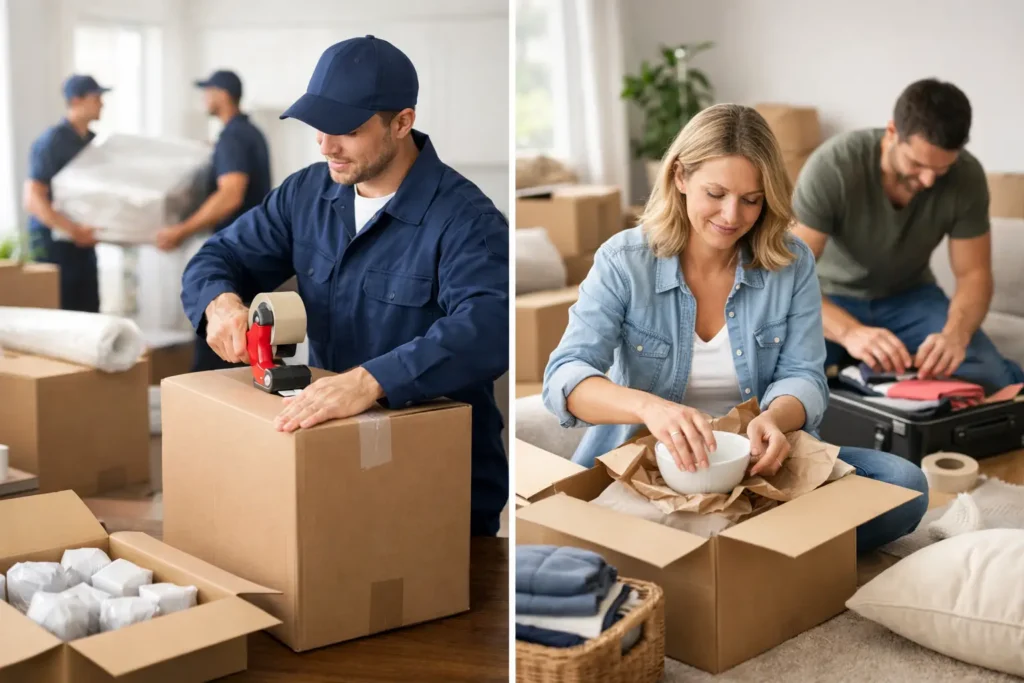
The boxes are still flat, the move date is getting closer, and every room seems to contain more than you remembered. Choosing between a packing service vs self packing can shape more than your moving budget. It affects how much time you lose to preparation, how well fragile belongings are protected, and how calm you feel in the final days before moving.
There is no single right answer. Some moves call for professional help from start to finish, while others are well suited to a carefully planned DIY approach. The best choice depends on your timeline, the items you own, your budget, and how much practical support you need.
Packing Service vs Self Packing: The Core Difference
With self packing, you source boxes and materials, sort your belongings, wrap each item, label cartons, and have everything ready before movers arrive. It is the lower up-front-cost option and gives you full control over how every drawer, shelf, and closet is handled.
A professional packing service assigns trained packers to prepare your belongings using suitable materials and methods. Depending on the service you choose, they may pack the entire property, focus on breakables, or handle selected rooms such as the kitchen, home office, or garage. The work is completed to a moving schedule, often in a day or less for a typical household.
The question is not simply whether you can pack your own home. Most people can. The more useful question is whether doing it yourself is the best use of your available time, energy, and moving budget.
When Self Packing Makes Sense
Self packing can be a practical choice for a small, straightforward move. If you are moving from a studio or one-bedroom apartment, have several weeks to prepare, and do not own many delicate or high-value items, packing yourself may keep costs under control without creating unnecessary pressure.
It also works well for people who prefer to sort as they pack. Moving is often a useful opportunity to donate unused clothes, recycle old paperwork, and avoid paying to transport things that no longer serve a purpose. Working room by room gives you time to make those decisions without someone waiting for instructions.
The savings can be meaningful, but they are not just the difference between a packing-service fee and zero cost. You will still need boxes, tape, labels, bubble wrap, packing paper, and protective covers. You may also spend evenings and weekends getting the job done. For some households, that trade-off is worthwhile. For others, it becomes expensive in lost time and last-minute stress.
Self-packing requires realistic planning
People tend to underestimate both the number of boxes required and the time involved. A kitchen alone can take hours once glasses, dishes, appliances, food, and awkward cupboard contents are packed safely. Books must be placed in smaller boxes to avoid excessive weight, while clothing, bedding, and toys quickly fill larger cartons.
Start earlier than feels necessary. Pack nonessential items first, then leave daily basics until the final days. Label every box with its destination room and a short description of the contents, such as “Kitchen – mugs and glasses” or “Main bedroom – winter clothes.” Clear labels help movers place boxes efficiently and make unpacking far less frustrating.
Why Homeowners Choose a Professional Packing Service
The primary benefit of professional packing is time. Instead of spending two weeks living among half-filled boxes, you can have experienced packers prepare your home in a focused, organized session. That can be especially valuable when a move overlaps with a demanding job, school schedules, childcare, property deadlines, or an office handover.
Protection is another major reason. Professionals know how to wrap glassware, secure mirrors, protect furniture, and build stable boxes that can be safely loaded and stacked. Packing is not only about getting belongings into cartons. It is about reducing empty spaces, distributing weight correctly, and preventing items from shifting during transport.
A full service can also create a clearer moving plan. The packing team works around the order in which items need to be loaded, while movers arrive to handle the heavy lifting and transport. For busy households, that coordination removes many of the small decisions that make moving day feel overwhelming.
Professional help is particularly worth considering if you have antiques, artwork, a large collection of glassware, oversized electronics, valuable furniture, or items with sentimental value that cannot easily be replaced. It may also be the sensible option after an injury, during pregnancy, or whenever lifting, bending, and extended packing sessions would put too much strain on you.
Comparing the Real Costs
Self packing is usually less expensive at first glance, because you are providing the labor. But compare the full picture before deciding. Add the cost of materials, the time needed to buy and assemble boxes, and the possibility of replacing belongings damaged by poor packing. If you need time off work to finish the job, that should be part of the calculation too.
A packing service costs more because it includes skilled labor and professional-grade supplies. In return, it can reduce the chance of rushed, poorly packed boxes and free you to deal with address changes, cleaning, utilities, keys, and the many other details that do not pause during a move.
The strongest value often comes from a middle option rather than an all-or-nothing decision. You could pack clothing, books, linens, and other low-risk items yourself, then hire professionals for the kitchen, fragile possessions, and large furniture. This approach lets you control spending while getting help where mistakes are most costly.
The Protection Question: What Are You Packing?
Not every item needs the same level of care. Towels and sweaters are forgiving. Wine glasses, monitors, framed artwork, lamps, and dishes are not. If you self pack, use the right materials rather than relying on loose newspaper, worn grocery bags, or boxes that have already weakened from previous use.
Boxes should be in good condition and properly sealed. Fill gaps with packing paper or other cushioning so items cannot move around. Keep heavy belongings in small boxes, and never place a heavy item directly on top of fragile pieces. Mark cartons containing breakables clearly, although careful wrapping matters more than a “fragile” label.
For expensive or unusual items, ask your mover about the recommended packing approach and the coverage that applies to your move. Insurance and liability terms can differ depending on the service and the item, so it is better to clarify this before moving day than make assumptions after damage occurs.
Time Pressure Changes the Decision
A long lead time makes self packing easier. A short-notice move changes the equation quickly. If contracts, lease dates, or work commitments leave you with only a few days, professional packers can turn an unrealistic to-do list into a workable plan.
The same applies to larger homes. Packing a two- or three-bedroom home while continuing normal family life is a sizable project. Rooms that look simple often hold years of stored possessions. Professional support can prevent the familiar final-night rush, when essentials get mixed into random boxes and fragile items are packed without enough protection.
Small businesses should also consider operational downtime. Employees packing files, equipment, stock, and desks may seem cost-effective, but it takes people away from their normal work. A tailored packing service can help keep an office move organized while allowing the business to continue serving customers.
How to Choose the Right Level of Help
Use your move date as the starting point. Then consider the size of the property, the number of fragile or valuable belongings, and the hours you can genuinely commit to packing. Be honest about your capacity. A plan to pack every evening is only useful if your work and family schedule actually allow it.
A professional mover should be able to tailor support to your move rather than pushing a fixed package. At Dencomovers, customers can choose practical assistance that fits the property, timeline, and budget, from transport support to more complete packing and moving help.
Before booking, confirm what materials are included, which rooms or items will be packed, when the team will arrive, and what needs to be set aside for your own access. Keep passports, medication, chargers, keys, essential documents, and a few days of clothing with you rather than placing them in the moving truck.
A Better Move Starts With an Honest Choice
Self packing can be satisfying and cost-conscious when you have time, sound materials, and a manageable amount to move. A packing service is often the better investment when time is short, belongings need specialist protection, or you simply want to arrive at moving day prepared instead of exhausted.
Give yourself permission to choose the support that makes the move more manageable. Whether you pack every box yourself or hand over the most demanding rooms, a clear plan now will make your new space feel closer from the moment the truck is loaded.