
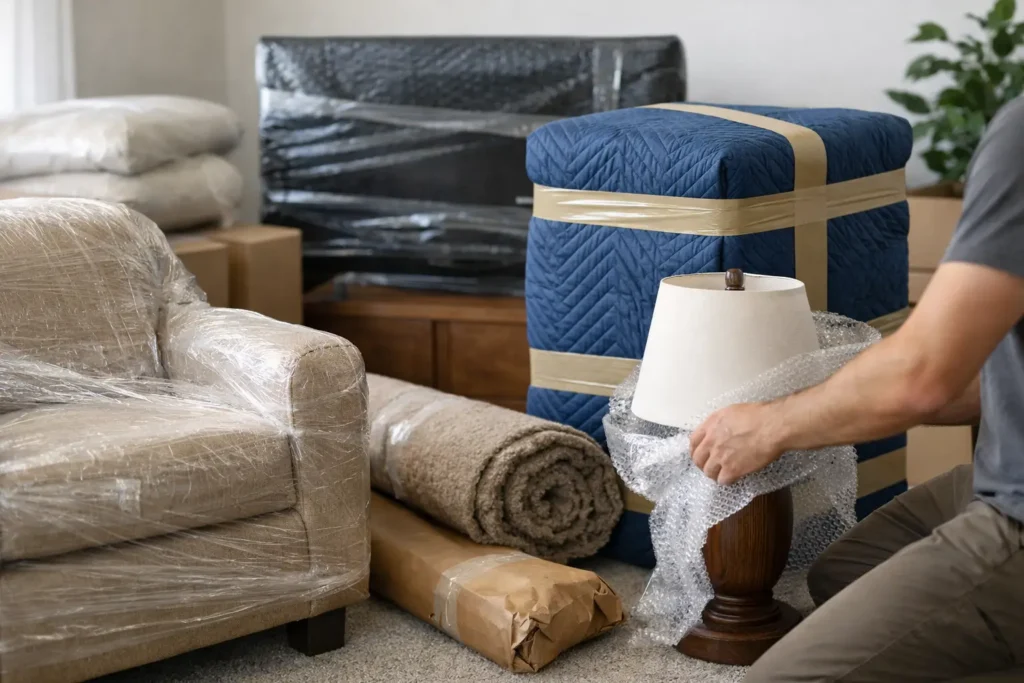
A sofa can look perfectly safe in your living room, then pick up a torn corner, scratched leg, or stubborn stain during one short trip to the moving truck. Furniture damage rarely comes from one dramatic accident. More often, it comes from rushed packing, loose items shifting in transit, or trying to carry an awkward piece without enough help. Knowing the best ways to protect furniture gives you more control over moving day and helps your belongings arrive in the same condition they left.
The right approach depends on the item, the distance, and whether it will go straight into your new space or into storage. A glass-front cabinet needs different care than a fabric sectional, and a solid-wood dresser needs different handling than a flat-pack desk. Start with a plan, use the right protective materials, and do not leave the heaviest work until the last minute.
1. Check Every Piece Before You Pack
Before wrapping anything, inspect your furniture closely. Take clear photos of larger or higher-value items from several angles, paying attention to existing marks, loose hardware, chips, and upholstery wear. This creates a useful record and helps you decide where extra protection is needed.
While you inspect, check whether drawers, doors, legs, shelves, and cushions can move or come loose. Tighten loose screws where appropriate, but avoid over-tightening old furniture or particleboard pieces that may be weakened by repeated assembly. Empty drawers unless the piece is specifically designed to be moved with contents inside. Full drawers add weight, can strain runners, and may slide open while the item is being carried.
2. Disassemble What Can Be Safely Taken Apart
Disassembly is one of the most practical ways to prevent damage. Removing table legs, headboards, detachable shelves, and sofa feet makes furniture easier to carry through doorways, down stairs, and around tight corners. It also reduces the chance of a leg snapping or a frame twisting under pressure.
Keep each item’s screws, bolts, brackets, and fittings in a labeled bag. Tape the bag securely to the underside of the furniture only if the surface will not be damaged by adhesive. Otherwise, place it in a clearly marked moving box that stays with you. Take a quick photo before disassembly, especially for beds, desks, and shelving units with several similar-looking parts.
Not every piece should be taken apart. Older wardrobes, antique furniture, and items with glued joints can become less stable once disturbed. If you are unsure, protect the piece as a whole and arrange for trained movers to assess the safest handling method.
3. Use the Right Wrap for the Material
Blankets, moving pads, stretch wrap, bubble wrap, and cardboard all serve different purposes. The best protection is not necessarily more wrapping. It is the right layer in the right place.
Moving blankets or padded furniture covers are ideal for wood, metal, and upholstered items. They cushion corners and prevent friction between pieces in the truck. Secure pads with stretch wrap, straps, or packing tape placed over the blanket rather than directly on finished wood or delicate fabric.
For glass, mirrors, and tabletops, use bubble wrap followed by a rigid cardboard layer. Mark the package as fragile, but do not rely on the label alone. Glass should travel upright, supported on both sides, never flat beneath heavy boxes.
Plastic stretch wrap is useful for keeping drawers and doors closed, holding protective pads in place, and shielding upholstery from dust or light moisture. Do not wrap wood furniture in plastic for extended storage, however. Trapped humidity can affect finishes and encourage mildew, particularly in damp or unventilated spaces.
4. Protect Corners, Edges, and Vulnerable Surfaces
Corners take most of the impact when furniture is set down, moved through hallways, or loaded beside other items. Add extra padding to the corners of dressers, cabinets, coffee tables, and desks. Cardboard corner protectors work well, but folded cardboard and padded blankets can also provide a practical layer of defense.
Wood finishes need special attention. Never place tape directly on varnished, painted, or lacquered surfaces, as it can lift the finish or leave residue. Separate wood pieces with moving pads so they cannot rub together during transport. For dining tables, remove the legs if possible and protect the tabletop with a blanket, then a cardboard sheet for added rigidity.
Upholstered furniture benefits from a breathable cover or clean moving blanket. If you use plastic, keep the exposure brief and make sure cushions and fabric are completely dry first. Moisture and sealed plastic are a poor combination.
5. Prepare Your Route Before Lifting
Some of the best ways to protect furniture have nothing to do with wrapping. A clear route prevents rushed turns, sudden stops, and collisions with doorframes. Measure large items and narrow access points before moving day, including elevators, stairwells, landings, and the path from the truck to the entrance.
Remove rugs, shoes, plants, and small furniture from walkways. Prop doors open when safe to do so, and protect doorframes or banisters if space is especially tight. If a piece will not fit comfortably, do not force it. Reassess the angle, remove more components, or use a different route.
Furniture sliders, dollies, and hand trucks can reduce strain and help avoid dragging pieces across floors. Still, these tools must be used correctly. A loaded dolly can tip quickly on uneven ground, while sliders are designed for smooth floors, not stairs. Heavy or awkward furniture is usually safer with at least two people handling it.
6. Load the Truck in a Stable Order
A well-packed truck protects furniture long after it leaves the driveway. Load heavy, sturdy items first and place them against the front wall of the truck, closest to the cab. Sofas, mattresses, appliances, and large cabinets can create a stable base when properly secured.
Keep furniture upright whenever its construction allows. Dressers, bookcases, and cabinets are generally more secure upright, while mattresses should travel on their side. Avoid stacking heavy boxes on tables, chairs, or upholstered pieces just because there appears to be open space.
Use ratchet straps or moving straps to secure each tier of the load. The goal is to prevent shifting, not to cinch so tightly that pressure damages the furniture. Fill small gaps with boxes, cushions, or padded materials so items cannot rock against one another during turns and braking.
7. Plan for Storage Conditions, Not Just Transport
If furniture is going into storage, prepare it for more than one day of travel. Clean every item first, because food crumbs, dust, and moisture can cause odors, mold, or pest problems over time. Let upholstered pieces dry fully after cleaning before covering them.
Choose a clean, dry storage space and keep furniture raised slightly off the floor using pallets, blocks, or a protective platform. Leave a small amount of air circulation around items instead of packing every inch tightly. Do not store mattresses or upholstered furniture directly against exterior walls, where condensation can be more likely.
Climate-controlled storage is worth considering for solid wood, leather, antiques, musical instruments, and delicate veneers. It may cost more, but extreme heat, cold, or humidity can do lasting damage that a moving blanket cannot prevent.
8. Know When Professional Help Is the Safer Option
DIY moving can work well for a few boxes or lightweight items, but large furniture presents real risks. A bulky sectional, heavy wardrobe, marble tabletop, or office desk can be difficult to maneuver safely even with friends helping. The cost of repair, replacement, or an injury can quickly outweigh the savings of handling it alone.
Professional movers bring the practical equipment, packing materials, and handling experience needed for tight spaces and heavy loads. They can also help plan the loading order and protect items during transport, which is especially valuable for house moves, office relocations, and longer-distance journeys. Dencomovers provides tailored moving support for customers who want experienced hands on the lifting, packing, and transport.
Furniture protection is ultimately about slowing down at the right moments. Wrap carefully, lift with a plan, secure every load, and ask for help before a difficult piece becomes a costly problem. That extra preparation can make arriving at your new home or workspace feel far more settled from the start.