
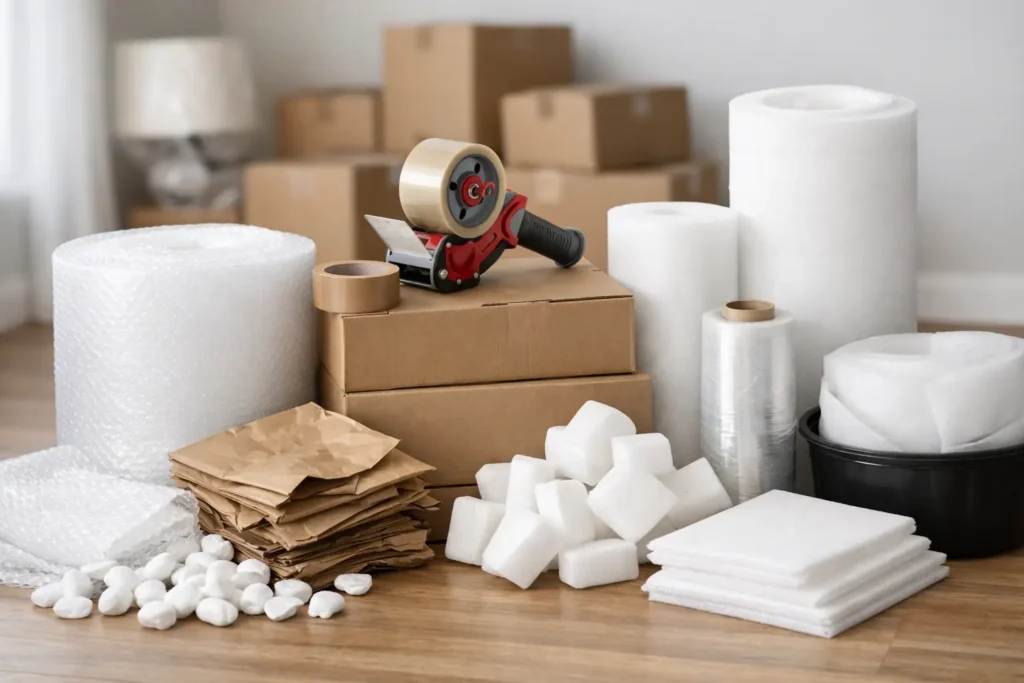
A move can go wrong before a single box reaches the truck. A weak carton splits under a stack of books, a poorly wrapped glass cracks in transit, or a missing marker turns unpacking into a frustrating search. Choosing the best packing materials for moving protects your belongings, saves time on moving day, and makes settling into your new place far less stressful.
You do not need to buy every packing product on the shelf. The right materials depend on what you own, how far you are moving, and whether your items will be handled by professional movers or stored for any length of time. The goal is simple: use strong containers, proper cushioning, and clear labeling where they matter most.
Start With Strong Moving Boxes
Moving boxes are the foundation of a safe pack. Purpose-made boxes are usually more reliable than used grocery or liquor store cartons because they are designed to be stacked and carried. They come in consistent sizes, close securely, and are less likely to have hidden weakness from moisture or previous use.
Small boxes are best for dense, heavy belongings such as books, canned goods, tools, records, and kitchenware. Medium boxes suit everyday household items, including toys, pots, small appliances, and folded clothing. Reserve large boxes for lightweight, bulky items such as bedding, pillows, lampshades, and towels. Filling a large box with books may seem efficient, but it makes the box difficult and unsafe to lift.
For fragile belongings, consider double-wall boxes. These have thicker cardboard and hold their shape better when stacked in a moving vehicle. Wardrobe boxes are also worthwhile for suits, dresses, coats, and other hanging clothes. They cost more than standard cartons, but they reduce folding, wrinkling, and time spent rehanging clothes at the other end.
Used boxes can still be a budget-friendly choice if they are clean, dry, and firm. Avoid cartons with soft corners, torn handles, water stains, or old packing tape that prevents a tight seal. A free box is not a saving if it fails halfway down the stairs.
Packing Paper Is the Everyday Essential
Plain packing paper is one of the most useful materials for almost every move. It wraps dishes, fills empty gaps inside boxes, separates framed pictures, and cushions small household items. Unlike newspaper, clean packing paper does not leave ink marks on glass, dishes, or light-colored fabrics.
Wrap fragile pieces individually, especially glasses, mugs, bowls, and decorative items. Crumple extra paper into the bottom of the box, around the sides, and over the top before closing it. The aim is to stop movement inside the carton. If you can hear items shifting when you gently move the box, add more padding.
You can use towels, socks, T-shirts, and linens as extra cushioning for non-delicate belongings. This is a practical way to reduce waste and make use of things you already need to pack. However, it should not replace proper wrapping for delicate glassware, mirrors, or valuable items. Fabric can cushion an item, but it does not always prevent direct impact between hard surfaces.
Bubble Wrap and Foam for Fragile Items
Bubble wrap provides more impact protection than paper, making it a sensible choice for fragile and higher-value belongings. Use it for electronics, glass tabletops, ornaments, picture frames, lamps, and delicate kitchenware. Place the bubble side toward the item, wrap it snugly, and secure it with tape so it cannot unravel.
Not every item needs several layers. A single layer may be enough for a sturdy framed print, while a glass vase or monitor needs more protection around corners and edges. Overpacking can make boxes bulky and expensive, but underpacking creates avoidable risk.
Foam pouches and foam corner protectors are particularly helpful for mirrors, artwork, televisions, and furniture with vulnerable edges. They are not essential for every move, yet they offer useful protection when an item has a high replacement cost or a finish that scratches easily. For flat-screen TVs, keep the original box if you still have it. Otherwise, use a fitted TV box with foam protection rather than trying to make a standard carton work.
The Best Packing Materials for Moving Furniture
Furniture needs protection from scratches, moisture, and shifting during loading. Moving blankets, also called furniture pads, are the most effective material for wooden tables, dressers, upholstered pieces, headboards, and large appliances. They create a thick barrier between items in the truck and help prevent damage from straps or contact with other furniture.
Use stretch wrap to keep drawers and cabinet doors closed, secure moving blankets, and protect upholstered furniture from dirt. Do not wrap bare wooden furniture tightly in plastic for long-term storage, particularly in damp conditions, because trapped moisture can affect the finish. For a same-day move, stretch wrap is useful when it is applied over a moving blanket rather than directly against delicate surfaces.
Mattress bags protect mattresses and box springs from dust, rain, and marks while they are carried through hallways, stairwells, and vehicles. They are inexpensive and especially useful for rental moves, where clean handling matters from the first door to the last.
Tape, Labels, and Markers Keep the Move Organized
Strong packing tape is not a place to cut corners. Choose a wide, heavy-duty tape designed for moving boxes, and use a tape dispenser to make sealing faster. Tape along the center seam, then add strips across both edges for heavy cartons. Reinforce the bottom before filling the box, not after it begins to sag.
Masking tape and painter’s tape have their place for temporary labels or holding light wrapping in position, but they are not strong enough to seal moving boxes. Duct tape is durable, yet it can be difficult to remove and may leave residue, so standard packing tape is generally the better option.
Label every box on at least two sides. Include the destination room and a brief description of the contents, such as “Kitchen – everyday plates” or “Office – cables and files.” Mark fragile cartons clearly, but do not rely on that label alone. Fragile boxes still need correct packing and should be placed on top of heavier items.
A simple color system can make unloading quicker. For example, use one color label for bedrooms, another for the kitchen, and another for the living room. This gives movers and helpers a clear direction without opening boxes or repeatedly asking where things belong.
Specialty Materials Worth Having
A few materials solve problems that standard boxes and paper cannot. They are most useful when your home includes awkward, valuable, or unusually heavy belongings:
- Dish-pack boxes have reinforced walls and are ideal for plates, glasses, and serving dishes.
- Mirror and picture boxes adjust to protect artwork, mirrors, and large frames.
- Plastic storage bins work well for cleaning supplies, garage equipment, and items that may face moisture, but they can be heavy and do not stack as securely as quality cartons.
- Zip-top bags keep screws, remote controls, shelf pins, and small hardware together. Label each bag and tape it to the related furniture piece or place it in an essentials box.
- Plastic wrap or sealable bins are useful for open bottles of toiletries, detergents, and pantry liquids, which can leak even when the lids appear secure.
Avoid packing hazardous or prohibited items without checking your mover’s policy. Fuel, propane tanks, certain chemicals, aerosols, and flammable products may not be suitable for transport in a moving vehicle. When in doubt, ask before moving day rather than leaving a risky item for the crew to discover.
Pack for Safe Carrying, Not Just Storage
The materials matter, but the way you use them matters just as much. Keep each box under a comfortable lifting weight, usually around 30 to 40 pounds for an average household carton. Put heavier items at the bottom, lighter items on top, and fill empty space so cartons stay firm when stacked.
Do not mix unrelated items simply to fill a box. A carton containing cookware, paperwork, cleaning products, and shoes is harder to unpack and more likely to be overloaded. Packing by room gives you better organization and helps create a smoother unloading plan.
Set aside an essentials box or bag for the first night. Include medications, chargers, important documents, toiletries, a change of clothes, basic tools, and anything your children or pets may need immediately. Keep this with you rather than placing it in the moving truck.
Professional support can make a meaningful difference when you have fragile furniture, a tight moving schedule, or a larger property to pack. At Dencomovers, trained movers can help plan the protection your belongings need, from careful wrapping to secure loading, so you are not left guessing which box or material will hold up.
A well-packed home is not about using the most materials. It is about using the right protection in the right place, then giving every box a clear purpose. When moving day arrives, that preparation leaves you free to focus on the new home ahead.