
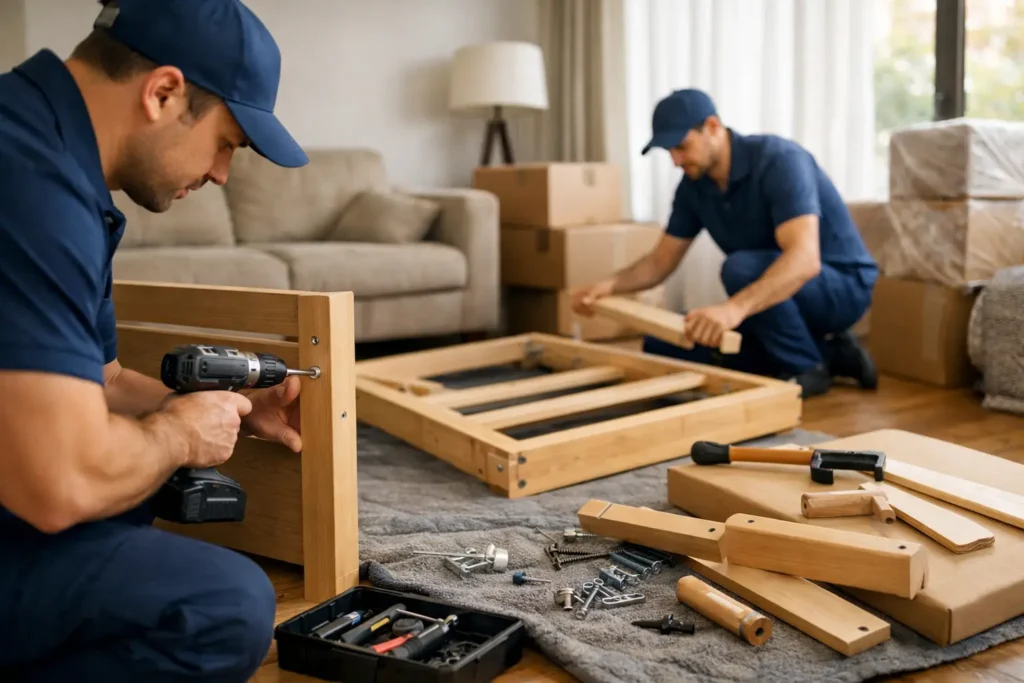
A sofa that will not clear the doorway, a bed frame with missing instructions, and a heavy wardrobe upstairs can turn moving day into a standstill. So, can movers disassemble furniture? In many cases, yes. Professional movers often take apart common household furniture when it is necessary for safe removal and transport. But the exact service depends on the company, the item, the time required, and what was agreed before your move.
The safest approach is to tell your moving company about every item that may need disassembly when you request a quote. That gives the crew time to bring suitable tools, plan the loading process, and allow enough time on the day. It also helps prevent a frustrating last-minute decision at your front door.
Can Movers Disassemble Furniture as Part of the Service?
Most full-service moving teams can disassemble straightforward furniture, particularly items that cannot be moved safely in one piece. This commonly includes bed frames, dining tables, desks, wardrobes, bookcases, modular sofas, and certain shelving units.
Disassembly is not always automatically included in a basic move. A small man-and-van booking, for example, may be priced around loading, driving, and unloading rather than furniture assembly work. A larger home move may include more hands-on support, but it is still worth confirming exactly what is covered.
The key question is not simply whether movers can do it. It is whether they have agreed to do it for your specific items. When you provide clear details in advance, your quote can reflect the labor involved rather than leaving you with unexpected charges or delays.
Furniture Movers Commonly Take Apart
Movers are generally comfortable with furniture designed to be assembled and disassembled, especially when the work is visible and accessible. A standard wooden bed frame, removable-leg dining table, flat-pack bookcase, or office desk is usually manageable with the right tools and a little preparation.
Disassembly can make a meaningful difference. It reduces the chance of scraped walls, damaged stair railings, broken furniture joints, and injuries from trying to force an oversized item through a tight space. It can also make better use of room in the moving truck, particularly during apartment or small-office moves.
For office clients, desks, meeting tables, storage units, and workstations often need careful dismantling before transport. Labeling sections and keeping hardware organized is especially helpful when employees need to get back to work quickly at the new location.
Items That May Need a Specialist
Some furniture is more complicated than it appears. Movers may decline, limit, or charge extra for items with electrical components, built-in plumbing, complex mechanisms, or high-value materials. Examples can include adjustable beds, wall-mounted units, antique furniture, large mirrored wardrobes, specialized gym equipment, and furniture attached to the structure of the home.
A wardrobe may look like a simple disassembly job, but a heavy mirrored door can require special packing and handling. An antique cabinet might have fragile joints that are safer left intact. A wall bed or built-in closet is closer to a removal and installation project than ordinary moving labor.
If an item has cables, gas connections, water lines, or requires fixing to a wall, ask whether a qualified specialist is needed. Moving crews should not be expected to disconnect appliances, alter electrical systems, or handle work outside their training and insurance coverage.
What Movers Usually Need From You
Good preparation lets movers work efficiently while protecting your belongings. Start by making a list of furniture that may need to come apart and send photos if the company requests them. Mention the item’s approximate size, where it is located, whether there are narrow stairs or elevators, and whether it needs reassembly at the destination.
Before the crew arrives, empty drawers, cabinets, and shelving. Remove loose glass, lamps, décor, and anything stored under the bed. A chest of drawers may sometimes be moved with lightweight contents inside, but that decision should be left to the movers after they assess its condition and weight.
Keep assembly instructions, spare hardware, and specialty tools in one clearly labeled bag if you have them. Experienced movers carry standard tools, but manufacturer-specific bolts, brackets, or Allen keys can save time. Do not tape hardware directly to finished wood or delicate surfaces, as adhesive can leave marks.
It also helps to clear a route from the furniture to the door. Shoes, boxes, rugs, and children’s toys can become trip hazards when a team is carrying a dismantled bed frame or heavy tabletop.
Will Movers Reassemble Furniture at Your New Home?
Many companies can reassemble the furniture they dismantled, provided this is included in the booking. This is especially useful for beds, tables, desks, and wardrobes that need to be functional straight away.
Reassembly does take time, and moving day schedules can be tight. If you need several large items rebuilt, say so before accepting a quote. The company can assign the right number of movers and plan the job realistically rather than rushing through the final stage of your relocation.
There are a few practical limits. Movers can usually rebuild furniture in its original configuration, but they may not be able to modify it to fit a new room, anchor it to a wall, or repair parts that were already damaged. If an item was unstable before the move, disassembly may reveal worn fittings or missing components that were not visible earlier.
When the furniture is rebuilt, check it before the crew leaves. Confirm that bed slats are secure, table legs are stable, drawers open properly, and all hardware has been accounted for. This is easier than noticing a missing screw after the truck has gone.
Questions to Ask Before Booking
A clear conversation before moving day protects both you and the moving team. Ask whether disassembly and reassembly are included, which items are covered, and whether there is an hourly charge for additional work. You should also ask about protection for glass, mirrors, and delicate finishes, as well as the company’s liability coverage.
If you are moving from or to an apartment, describe access honestly. Tight hallways, restricted parking, stairs, elevator reservations, and long carrying distances can all affect the time needed. A dependable moving company will use this information to offer a more accurate plan, not to make the process feel complicated.
It is also reasonable to ask what happens if furniture cannot be safely taken apart. The answer may be that the item needs a specialist, a different route out of the property, or removal by a separate service. Knowing this early gives you options.
When It Makes Sense to Disassemble Furniture Yourself
Taking furniture apart yourself can reduce moving-day labor if you are confident with the job and have enough time. It may suit simple flat-pack pieces, lightweight tables, or bed frames with clear instructions. Take photos as you go, place hardware in labeled bags, and protect exposed corners before the movers arrive.
However, doing it yourself is not always the cheaper choice. A rushed attempt can strip screws, crack particleboard, lose essential fittings, or leave you with an unidentifiable pile of panels at the new home. For large, awkward, or expensive furniture, professional handling is often the more reassuring option.
Avoid partly dismantling an item unless you know it can be safely carried that way. Loose rails, unsecured doors, and unsupported panels can create more risk than moving a properly assembled piece.
Make Furniture Planning Part of Your Moving Plan
Furniture disassembly is a practical service, not an assumption to make at the last minute. Share the details early, ask what is included, and choose a moving team that is willing to plan around your home, your access, and the items you need ready at the other end.
A little advance planning means your movers can arrive prepared, protect what matters, and keep your move moving forward when the sofa, bed, or desk would otherwise stop it cold.