
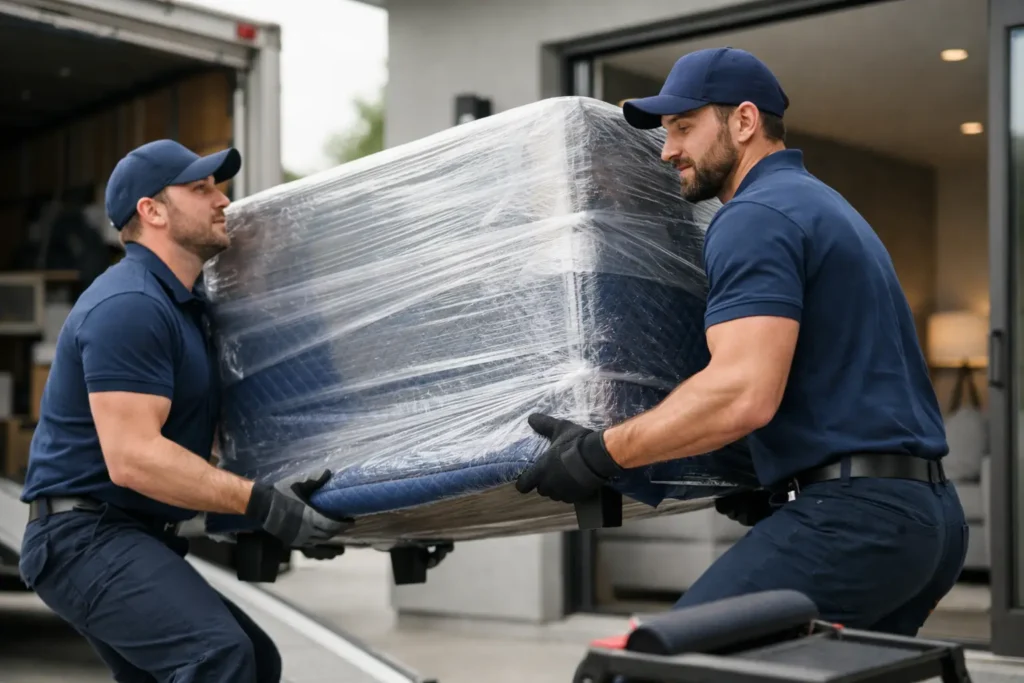
A sofa that barely cleared the doorway on delivery can become the hardest part of a move. Add stairs, narrow hallways, a heavy dresser, or a large appliance, and a simple moving day can quickly turn into a risk to your belongings, your property, and your back. Trained movers for heavy lifting bring the experience, planning, and equipment needed to handle these items with care.
For a house move, apartment relocation, furniture collection, or small office move, the value is not simply having extra hands. It is having people who know how to assess weight, protect surfaces, work safely as a team, and adapt when the route is more complicated than expected.
Heavy Lifting Is More Than a Strength Job
Heavy furniture can be awkward even when it is not particularly large. A solid wood wardrobe may be top-heavy. A sectional sofa may need to be maneuvered around tight corners. A washing machine is compact but difficult to grip and can be damaged if handled incorrectly. Office desks, filing cabinets, and conference tables often need careful disassembly before they can move safely.
Professional movers do not approach these items by simply lifting harder. They consider the full route first: the pickup point, stairs, elevators, doorways, parking access, and final placement. That preparation helps prevent rushed decisions halfway through the job, when a wall gets scuffed or an item becomes stuck in a stairwell.
Good lifting technique also matters. Movers should work in coordinated pairs or teams, use controlled movements, and avoid twisting under load. The aim is to protect people as much as possessions. Trying to move a bulky item with friends may seem like a way to save money, but one injury, dropped item, or damaged banister can cost far more than professional support.
What Trained Movers for Heavy Lifting Do Differently
Training shows up in the small decisions that make a move safer and more efficient. Before lifting, movers identify where an item can be held securely and whether drawers, legs, doors, shelves, or detachable parts should be removed. They use moving blankets and appropriate wrapping to protect finishes, then secure items in the vehicle so they do not shift during transport.
They also know when an item needs more than manual lifting. Hand trucks, dollies, straps, furniture sliders, ramps, and lifting aids all have a place, but only when used correctly. The right equipment reduces strain and gives the team better control. For example, a heavy appliance may require a dolly and protective covering, while a large cabinet may need to be partially disassembled before it can pass through a doorway.
Communication is another part of the job. One person should guide the lift, call out turns and steps, and make sure everyone has a clear path. This is particularly useful in apartment buildings, older homes with tight staircases, and busy office settings where access needs to be managed around other people.
Items That Often Need Professional Handling
Most moves include a few pieces that deserve special attention. Large sofas, beds, wardrobes, dining tables, appliances, safes, exercise equipment, and oversized mirrors are common examples. In a small office, the challenge may be packed filing cabinets, workstations, printers, or heavy storage units.
The weight of an item is only one factor. Size, shape, fragility, and access all affect how it should be moved. A relatively light but oversized mirror can be more difficult to handle than a compact chest of drawers. A heavy recliner may be manageable on the ground floor but become a much bigger job when it needs to go up two flights of stairs.
When requesting a quote, describe these items clearly. Mention stairs, elevators, limited parking, narrow entrances, or long walks from the vehicle to the property. Photos and measurements can also help a moving team plan the right crew size and equipment before arrival.
Protecting Your Home or Office During the Move
Heavy lifting can damage more than the item being moved. Door frames, floors, walls, stair rails, and elevators are all vulnerable when large furniture is carried through a building without a plan. Trained movers use protective materials and careful handling to reduce these risks.
This does not mean every move is free from challenges. Older properties may have tight turns, uneven steps, or low ceilings. Some furniture simply cannot be removed in one piece. In those cases, an experienced team should explain the options clearly, whether that means disassembly, a different route, additional movers, or a separate specialist service for unusually difficult items.
A reliable moving company should also be open about its insurance coverage and the scope of its service. Insurance can provide added reassurance, but customers should understand what is covered and how items need to be packed or prepared. For added peace of mind, Dencomovers provides visible insurance coverage of up to £5,000 while focusing on careful handling from loading through unloading.
When a Man and Van Is Enough, and When You Need a Full Crew
A man-and-van service can be a practical, affordable choice for a small move, a furniture pickup, or a few boxes and lighter items. It is especially useful when access is straightforward and you have already packed most of your belongings.
However, a larger move with multiple heavy pieces may require a full moving team. The number of movers should match the property, volume, access conditions, and heaviest items involved. Booking too few people may create delays and increase the chance of strain or damage. Booking a properly sized crew can make the day shorter, safer, and less stressful.
For example, a studio apartment on the ground floor may need only limited help, while a family home with a second-floor bedroom set, appliances, and a packed garage needs more coordination. The right service is not always the biggest one. It is the one tailored to the work that actually needs to be done.
How to Prepare Heavy Items Before Movers Arrive
A little preparation helps trained movers work quickly and safely. Empty drawers, cabinets, and filing units unless the moving team has specifically told you otherwise. Remove loose shelves, unplug appliances, and make sure pathways are clear of boxes, rugs, and other trip hazards.
If a piece of furniture has existing scratches, loose legs, or a damaged handle, point it out before loading. This gives the crew a chance to plan the safest way to handle it and helps everyone have clear expectations. Keep children and pets away from active lifting areas, especially near stairs and entryways.
You can also make the arrival and unloading process easier by reserving parking where possible and confirming building requirements in advance. Some apartment buildings require elevator bookings or proof of insurance. Small offices may need moves completed outside business hours to avoid disrupting staff and customers.
Questions Worth Asking Before You Book
The best moving support starts with a clear conversation. Ask whether the team has experience with your specific heavy items, how many movers will attend, and what equipment they will bring. Confirm whether packing, disassembly, reassembly, and protective wrapping are included or available as extra services.
It is also sensible to ask about access issues. A company that asks you detailed questions about stairs, elevators, distances, and parking is not making the process difficult. It is planning ahead. That level of preparation is often what separates a controlled move from a stressful one.
Price matters, especially when you are managing the costs of a new home or office. But the lowest quote may not include the crew size, protection, or experience needed for demanding lifting work. A clear, tailored quote gives you a better basis for comparison than a vague estimate.
Moving heavy items should not mean gambling with your furniture or your health. Share the details of your move early, choose a team that plans carefully, and let experienced hands take on the weight so you can focus on settling into the next place.