
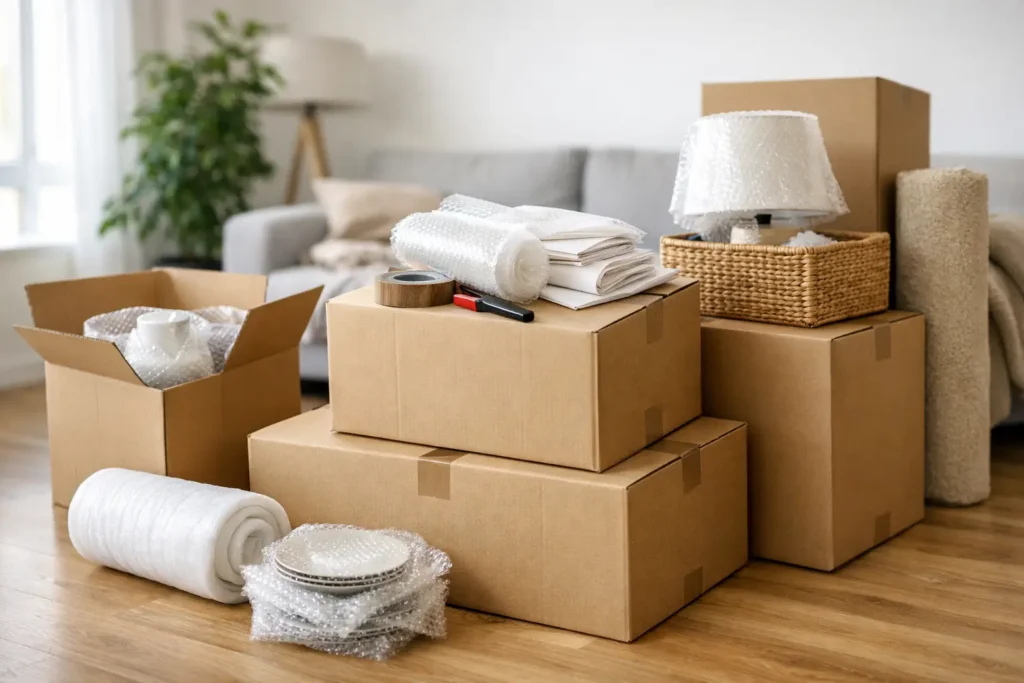
A move can go wrong before the truck even arrives. A box that is too large becomes too heavy to lift, a thin grocery-store carton can split at the bottom, and loosely packed dishes may not survive a single sharp turn. Choosing the best boxes for house moving gives your belongings a safer start and makes loading, carrying, and unpacking far more manageable.
The right box is not always the biggest or cheapest option. It needs to suit what is going inside, hold its shape when stacked, and remain comfortable for someone to carry. A thoughtful mix of strong moving boxes, protective materials, and clear labels helps prevent damage while keeping moving day organized.
How to Choose the Best Boxes for House Moving
Start with strength, not just size. Purpose-made moving boxes are usually made from double-wall corrugated cardboard, which means two layers of fluting provide added support. They are designed to be stacked in a moving truck and handled repeatedly without collapsing. Used boxes can save money, but only if they are dry, clean, free from crushed corners, and still firm along the seams.
Check the bottom of every box before packing. If the cardboard feels soft or the tape has lifted, recycle it rather than trusting it with your belongings. A box may look acceptable when empty but fail once it holds books, cookware, or other dense items.
Box size matters just as much. Small boxes are the safest choice for heavy possessions, while medium and large boxes are better for lighter, bulkier items. This simple rule protects both your belongings and the people carrying them. A packed box should ideally be heavy enough to use space efficiently but light enough to lift with control.
For most home moves, a combination of small, medium, large, wardrobe, and specialty boxes is more useful than ordering one size in bulk. The exact quantity depends on the size of your home, how much you own, and whether you are packing a garage, storage unit, or home office as well.
The Essential Box Types for a House Move
Small boxes for heavy items
Small cartons are the workhorses of a move. Use them for books, canned food, tools, records, toiletries, small appliances, and kitchenware. Their limited capacity stops you from accidentally creating a box that is too heavy to carry safely.
Books deserve particular care. Pack them flat or alternate the direction of the spines to keep the box balanced. Fill gaps with packing paper so the contents do not shift, but do not force the lid closed. If a small book box is difficult to lift before it is taped, remove a few items.
Medium boxes for everyday household items
Medium boxes are often the most versatile option. They work well for pots and pans, toys, electronics, folded clothing, pantry items, decorative pieces, and bathroom supplies. Because they are neither too deep nor too narrow, they are easier to stack and carry through hallways and stairways.
Use packing paper or clean towels between fragile items. Towels and linens can be useful padding, but they should not replace proper wrapping for glassware, ceramics, or anything with a sharp edge. A little extra protection takes less time than replacing a broken item later.
Large boxes for lightweight, bulky belongings
Large boxes should be reserved for items that take up room without adding much weight. Think pillows, comforters, blankets, stuffed toys, lampshades, winter coats, and lightweight plastic containers. Packing books or dishes into a large carton is one of the most common moving mistakes because the box quickly becomes unsafe to lift.
Keep bulky items from moving around by filling empty spaces with paper, cushions, or clothing. The goal is a box that is full but not bulging. A bowed-out carton is harder to stack and more likely to split.
Wardrobe boxes for hanging clothes
Wardrobe boxes have a built-in hanging bar, allowing you to move clothes directly from the closet to the box. They are especially helpful for suits, dresses, coats, delicate fabrics, and anything that would take time to fold and rehang.
They do cost more than standard cartons, so they are best used selectively. For casual clothing, suitcases, dresser drawers, or regular moving boxes may be more economical. Keep wardrobe boxes upright during the move, and avoid placing heavy items on top of them.
Dish packs and specialty boxes
Dish packs are reinforced cartons intended for fragile kitchen items. They are a sensible choice for plates, bowls, glasses, serving dishes, and small framed pictures. Wrap each piece individually, place heavier items at the bottom, and stand plates on their edges rather than stacking them flat. Plates are generally stronger this way when packed tightly with padding.
Specialty boxes are also worthwhile for televisions, mirrors, artwork, and lamps. Their value depends on the item being moved. A standard box with careful padding can work for a lower-value item, but a fitted box offers better protection for something expensive, unusually shaped, or sentimental.
What Makes a Moving Box Safe to Stack?
A strong box can still be packed poorly. To create stable stacks, distribute weight evenly and keep the top surface flat. Heavy boxes belong on the bottom, while lighter cartons should sit above them. Do not stack a large lightweight box beneath a small heavy one simply because it fits the space.
Tape is part of the box’s strength. Use packing tape rather than masking tape or string, and seal the bottom with several strips in an H pattern: one strip along the center seam and one across each edge. Reinforce used boxes and any carton carrying heavier items. Close the top securely once packed, but do not rely on tape to contain an overfilled box.
Avoid mixing unrelated items just to fill space. A box labeled “Kitchen” that also contains cables, tax documents, and a bathroom scale creates confusion when you need something quickly at the new home. Group items by room and by purpose whenever possible.
Pack for the First 24 Hours, Not Just the Truck
The best boxes for house moving also make arrival easier. Set aside one clearly marked essentials box or bag for the first day. It should include chargers, medication, basic toiletries, snacks, important paperwork, a change of clothes, and any everyday items your household will need before everything is unpacked.
Keep this box with you rather than loading it deep inside the truck. The same approach applies to valuables, passports, jewelry, and critical documents. Even with professional handling, these are items you may prefer to transport personally.
If you have children or pets, prepare a separate easy-access bag for their immediate needs. Moving day is busy enough without searching through ten identical boxes for a favorite toy, food, or medication.
Label Boxes So Movers Can Handle Them Properly
A clear label is a practical protection tool. Write the destination room on at least two sides of every box, then add a short description such as “Kitchen – mugs and glasses” or “Office – printer cables.” This gives you a better chance of finding what you need without opening multiple cartons.
Mark fragile boxes clearly, but remember that the label does not make a box safe on its own. Proper wrapping, a strong carton, and smart loading are what protect fragile items. Add “This Side Up” only when the contents genuinely need to stay upright, such as lamps, certain electronics, or dishes packed vertically.
Numbering boxes can help with larger moves. For example, you can write “Bedroom 1 of 8” on each carton from that room. This makes it easier to see whether anything is missing before the moving team leaves.
When Professional Packing Is Worth Considering
Packing yourself can reduce costs, particularly for clothing, books, and everyday items. However, professional packing is often worth considering when time is short, there are many fragile belongings, or you are moving a large home while managing work and family commitments. Trained movers know how to wrap, stack, and load cartons to reduce risk in transit.
For smaller moves, you may only need help with the heavy lifting and transportation. For a larger relocation, full packing support can remove a major source of pressure. Dencomovers can tailor moving support around the amount of help you need, from carefully moving packed boxes to managing more of the relocation process.
The best packing plan is the one that keeps boxes secure, clearly labeled, and realistic to carry. Choose sturdy cartons, match their size to the contents, and leave yourself enough time to pack without rushing. When moving day arrives, those simple decisions will make your new place feel closer to home.